
Blackout Fabric for Curtains in Boston, MA: What Designers Actually Recommend
By Kendra Weldon, owner and lead designer at Simply Windows in Westborough, MA
The best blackout fabric for curtains is a tightly woven triple-weave fabric, or a beautiful designer fabric paired with a blackout lining. Both block nearly all outside light, and both can look like real drapery instead of a dark blanket over your window. The right pick depends on the room, the window, and how much light you need to stop.
Below, we walk through your options, the common mistakes that let light sneak in, and how to choose for your home, whether that is a Beacon Hill brownstone with a streetlight outside or a colonial in Newton or Needham.
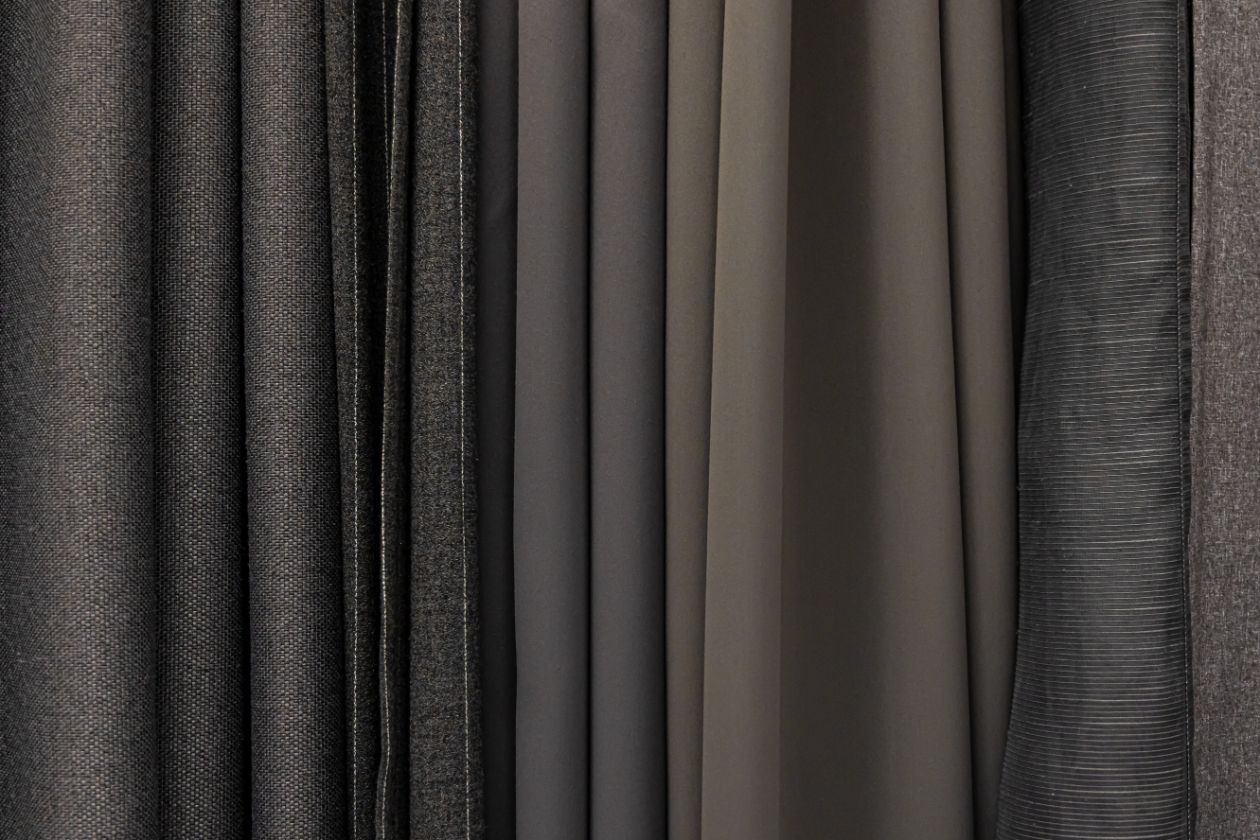
What is the best blackout fabric for curtains?
For most homes, the answer is one of three things:
- Triple-weave fabric. A dark layer is woven between two outer layers. You get strong light blocking with a softer, more natural drape than coated fabrics.
- Designer fabric with a blackout lining. You pick the fabric you love, and a separate lining does the light blocking. This is the go-to for living rooms and primary bedrooms where the look matters as much as the darkness.
- Foam-backed fabric. A foam layer on the back blocks light and adds some insulation. It works well when function comes first, though it can feel stiffer.
If you only remember one thing: the fabric on the front is the look, and the layer behind it is the performance. Good custom drapery lets you choose both on purpose.
How do the main blackout options compare?
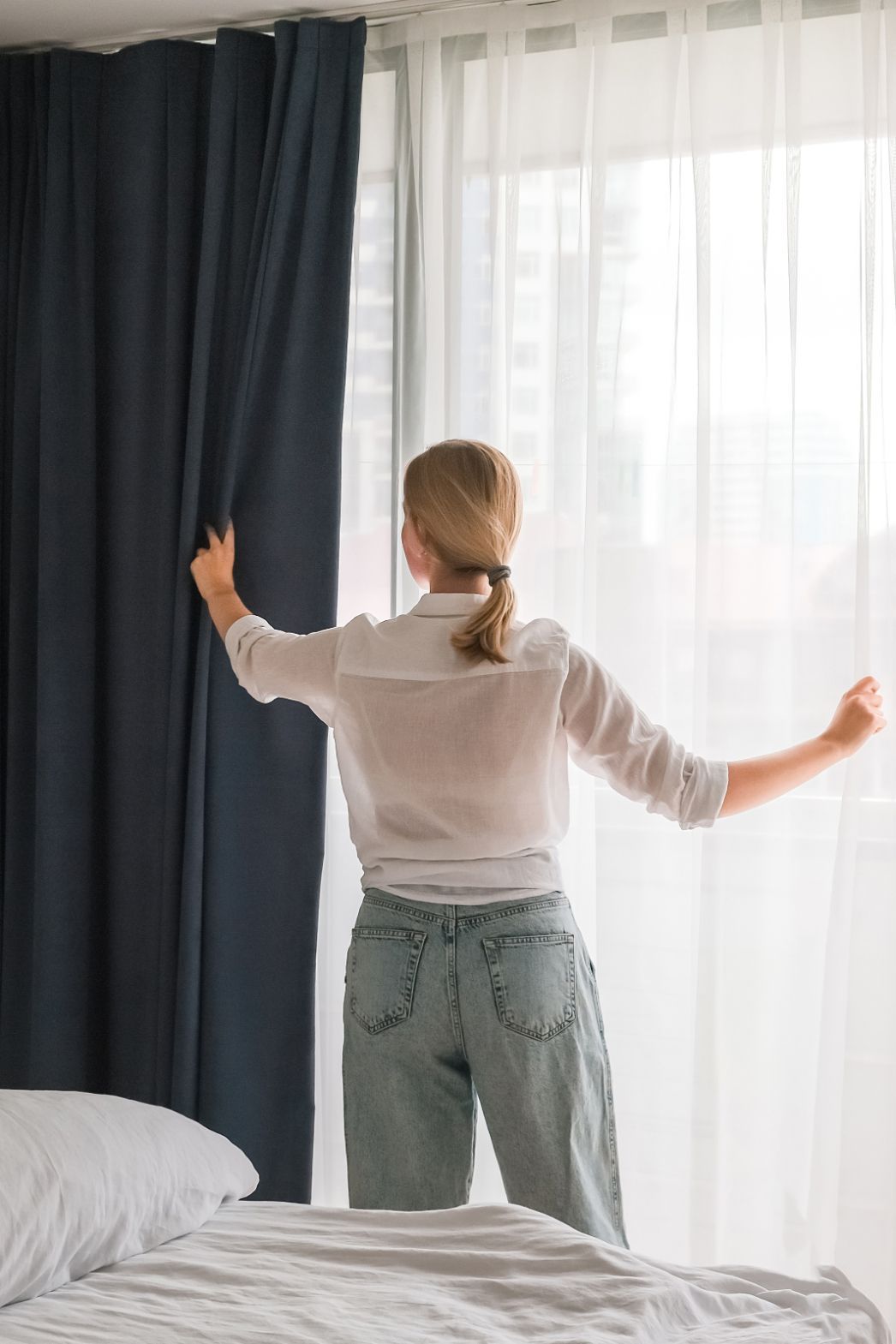
Triple-weave. This is a solid all-rounder. It hangs well, folds neatly, and suits bedrooms, nurseries, and media rooms. It comes in many colors, so it rarely feels like a compromise.
Blackout lining. A lining sewn behind your chosen fabric is our favorite way to get a high-end result. Your linen, velvet, or patterned designer fabric stays the star. The lining works quietly behind it. This is a strong fit when you want your curtains to look like part of the design, not just a light fix.
Foam-backed and thermal fabrics. These add a layer that can help slow drafts and heat loss around a window. Results depend on the window, the fit, and how the curtains are hung, so think of them as a helpful extra, not a guarantee.
A note on noise. Heavier, lined curtains can soften some outside sound. They are not soundproofing, so we never promise a silent room
Do blackout curtains really block all the light?
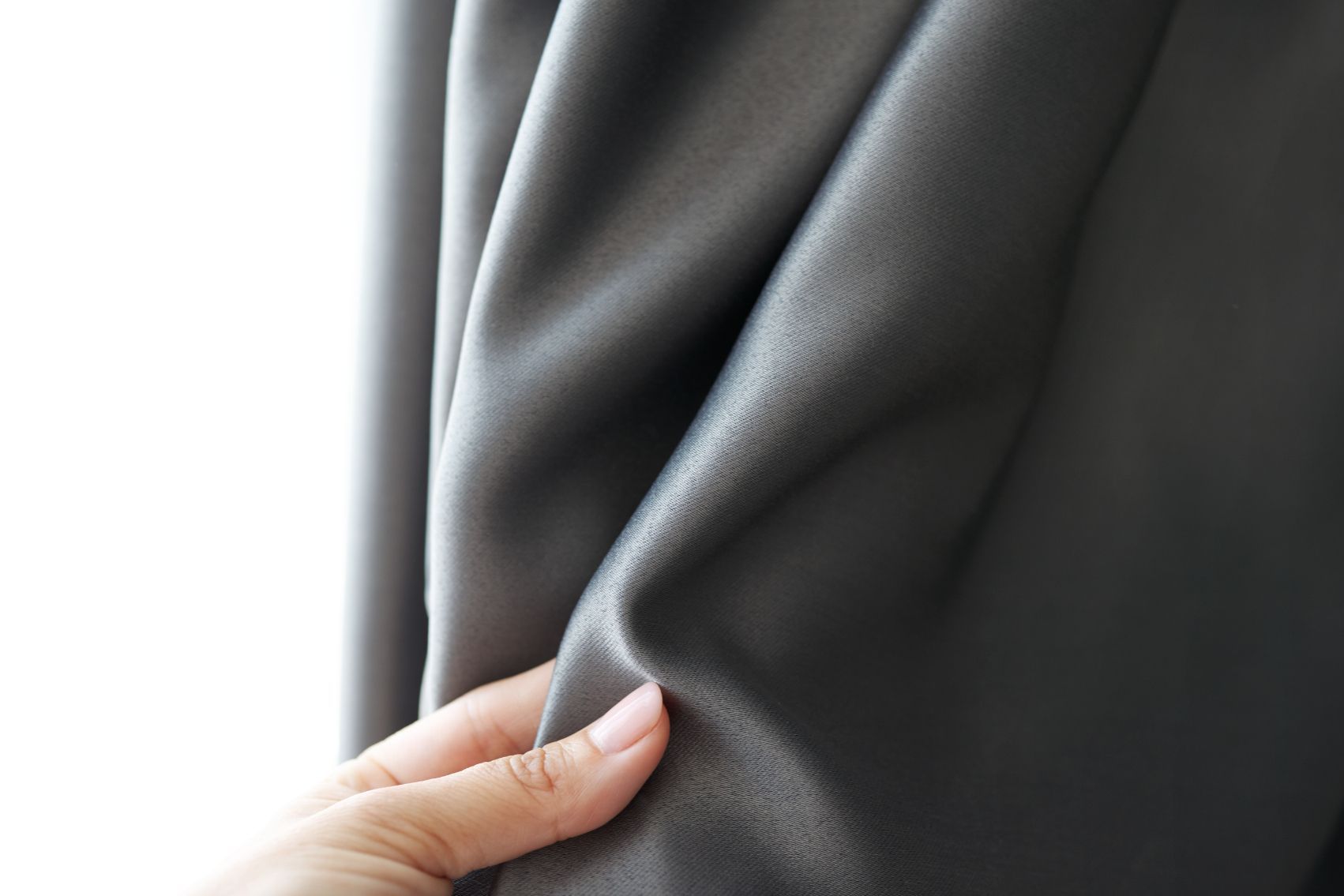
Not always, and the fabric is rarely the reason. Light leaks usually come from how the curtains are made and hung. The most common culprits:
- Panels that are too narrow. If the curtains do not have enough fullness, gaps open when they are closed.
- Mounting too close to the window. Light slips in around the top and sides. Hanging the rod higher and wider helps.
- No side returns. Returns are the curved ends that bring the curtain back toward the wall. They block the glow at the edges.
- Short lengths. A curtain that stops well above the floor lets light in from below.
This is where a designer earns their keep. Measuring and building the curtain to stop these leaks matters as much as the fabric you choose. For more on getting fullness right, see our guide to how many drapery panels you need.
Which blackout fabric is best for each room?
Bedrooms. Go with triple-weave or a blackout lining in a calm, deep color. In Boston's city neighborhoods, streetlights and headlights can shine right into the room, so complete edge coverage matters.
Nurseries. Daytime naps are easier in a dark room. Choose a soft, washable-friendly look and skip anything with loose trims a little one could reach.
Media rooms and home theaters. Darker colors reflect less light onto the screen. Blackout lining behind a textured fabric keeps the room cozy and controlled.
Living rooms and dining rooms. You may want daylight in the morning and privacy at night. A lined drapery panel works beautifully here, and it can be layered with a sheer or a shade.
Suburban colonials in Newton, Needham, and Natick. Large, symmetrical windows look great with full-length lined panels. They frame the room and give you blackout control at bedtime.
Should I choose blackout curtains or a blackout shade?
You do not have to choose. Many of our favorite window designs use both. A blackout shade, such as a Hunter Douglas roller or cellular shade, gives you a clean, tight seal inside the window frame. Draperies on top add softness, style, and an extra layer of light control.
If you want to raise and lower everything at the touch of a button, motorized shades with Hunter Douglas PowerView can be scheduled to close at bedtime and open with the sun. It is a great option for hard-to-reach windows and for tall rooms.
Can I buy blackout fabric and make the curtains myself?
You can, and many people do. Just know that blackout fabrics can be heavy, tricky to sew, and unforgiving with measurements. A small mistake in width, length, or hardware can leave gaps that undo the whole point.
With custom drapery from Simply Windows, the measuring, fabric selection, lining, workroom, and White Glove installation are all handled for you. Our custom draperies are built for your exact windows, so the light blocking works the way you hoped.
Frequently asked questions about blackout curtains
Is blackout the same as room darkening?
No. Room darkening fabrics reduce light and give you a softer, dimmer room. Blackout fabrics are made to block nearly all light. If you sleep during the day, work night shifts, or want a true home theater, choose blackout.
Are blackout curtains good for insulation?
They can help. A thicker, lined curtain adds a layer between you and the glass, which can help reduce drafts and heat loss. How well it works depends on the window, the fabric, and how the curtain fits and hangs.
Will blackout lining make my drapes look stiff or heavy?
Not when they are made well. A quality blackout lining, matched to the right outer fabric, still hangs with soft, full folds. That is one of the biggest benefits of working with a designer instead of buying off-the-shelf panels.
Can any designer fabric be made into blackout curtains?
In most cases, yes. Adding a blackout lining behind your chosen fabric lets you keep the look you love. Some very sheer or loosely woven fabrics need extra planning, and we will tell you honestly if a different fabric will serve you better.
Ready to transform your windows? Request your free in-home consultation.
Kendra Weldon has more than 20 years of interior design experience, and Simply Windows has served Greater Boston since 2010. We bring the showroom to you, with samples in hand, so you can see blackout options in your own light, in your own room. There is no pressure, just good design advice.
